Back to selected work

Real-time trading alerts

EMA Alert System
case study.

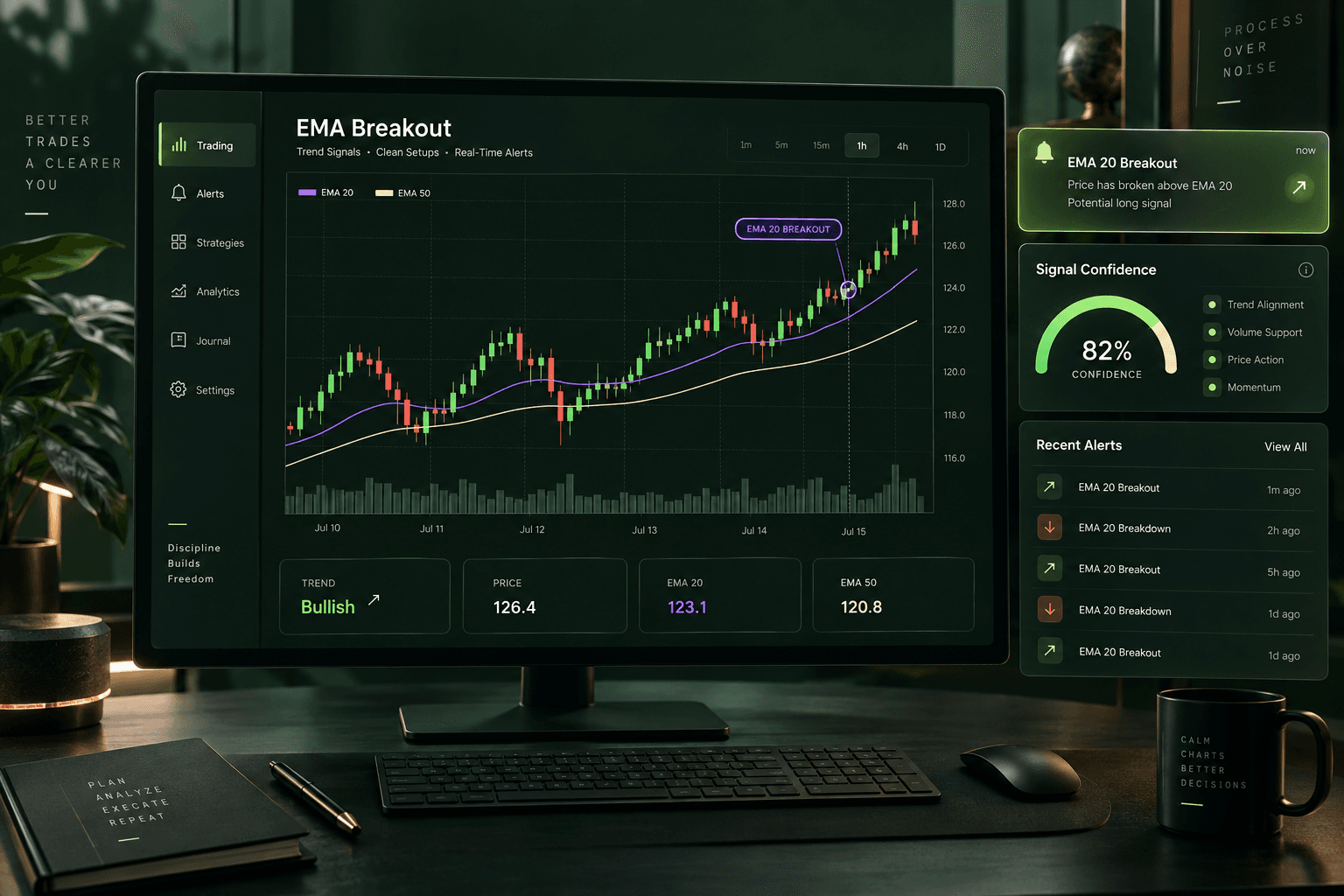
An automated monitoring system that identifies EMA 20 breakouts, generates timely trade alerts and reduces false signals.

EMA Alert System interface and project preview
4Core technologiesFullCase studyUXUser focusedWebResponsive

Why EMA Alert System needed to exist.

Continuous chart monitoring is time-consuming, and basic crossover alerts can generate noisy signals.

An automated watcher evaluates EMA 20 breakouts and applies signal rules before delivering timely alerts.

Who it serves

Traders monitoring price action around the 20-period exponential moving average.

Business value

Reduces manual monitoring and helps users respond consistently to predefined market conditions.

Designed around the essential workflow.

01

EMA 20 monitoring

Designed as part of a cohesive real-time trading alerts experience, with clarity, reliability and practical use in mind.

02

Breakout detection

Designed as part of a cohesive real-time trading alerts experience, with clarity, reliability and practical use in mind.

03

Automated alerts

Designed as part of a cohesive real-time trading alerts experience, with clarity, reliability and practical use in mind.

04

False-signal filters

Designed as part of a cohesive real-time trading alerts experience, with clarity, reliability and practical use in mind.

Value for users and the business.

Saves monitoring time

Encourages rule-based decisions

Delivers timely signals

Built with constraints in view.

Indicators cannot guarantee outcomes

Market-data quality and latency affect signals

EMA 20Market DataAutomationSignal Detection
01

Discover

Understand the users, business objective and constraints.

02

Design

Map the core journey and reduce unnecessary interaction.

03

Build

Implement maintainable interfaces, services and data flows.

04

Validate

Test behavior, responsiveness and failure paths before release.

Project by Sandipan Das

Have a similar
problem to solve?

Start a conversation