Back to selected work

Booking platform

Rental & Travel
case study.

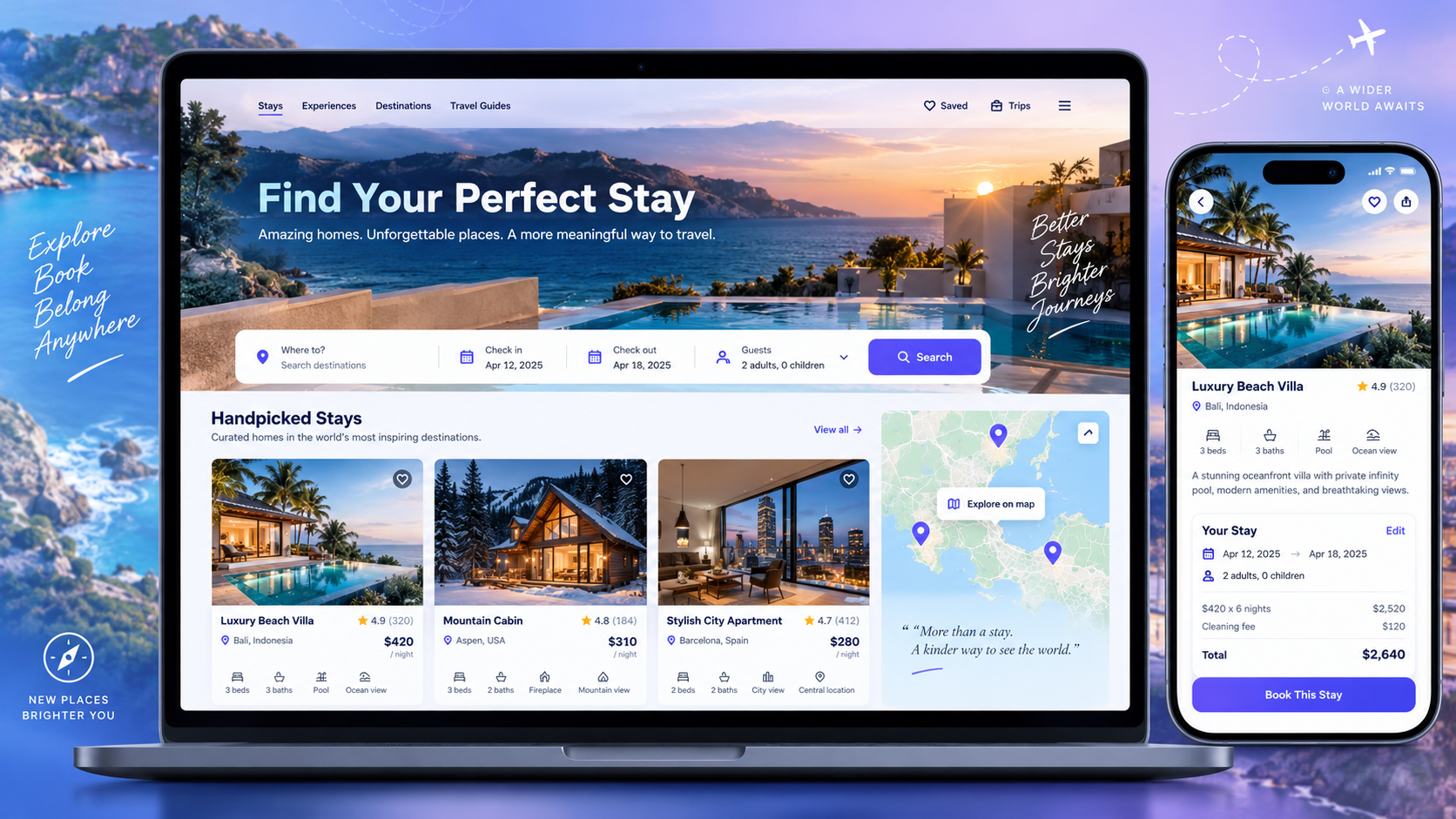
A two-sided booking platform with owner and user dashboards, advanced filters, availability tracking and date-conflict validation.

Rental & Travel interface and project preview
4Core technologiesFullCase studyUXUser focusedWebResponsive

Why Rental & Travel needed to exist.

Booking systems must keep search, availability and owner inventory synchronized while preventing date conflicts.

A two-sided platform offers advanced discovery, owner and user dashboards, availability tracking and booking validation.

Who it serves

Property owners and travelers managing short-term bookings.

Business value

Turns inventory into bookable supply while reducing manual coordination and double-booking risk.

Designed around the essential workflow.

01

Advanced property filters

Designed as part of a cohesive booking platform experience, with clarity, reliability and practical use in mind.

02

Owner and traveler dashboards

Designed as part of a cohesive booking platform experience, with clarity, reliability and practical use in mind.

03

Availability calendar

Designed as part of a cohesive booking platform experience, with clarity, reliability and practical use in mind.

04

Date-conflict validation

Designed as part of a cohesive booking platform experience, with clarity, reliability and practical use in mind.

Value for users and the business.

Improves booking conversion

Gives owners inventory control

Reduces scheduling errors

Built with constraints in view.

Availability must remain strongly consistent

Payments and cancellation rules add domain complexity

A stack where every tool has a clear responsibility.

The architecture for Rental & Travel was shaped around the product workflow, integration boundaries and long-term maintainability. Technologies are used for specific responsibilities rather than added only to make the stack appear larger.

Experience1 tools

React

Builds reusable, state-driven interfaces and keeps complex user journeys organized into maintainable components.

Services & integration2 tools

Node.js

Runs the server-side JavaScript services, integration logic and non-blocking application workflows.

REST API

Defines stable, integration-friendly communication between interfaces and backend services.

Data1 tools

MongoDB

Stores flexible application records and supports evolving product data without rigid table structures.

Clear boundaries

Interface, business logic, persistence and external services remain separated so changes are easier to reason about.

Defensive data handling

Validation and predictable contracts protect downstream workflows from incomplete or unexpected input.

Deployment-aware design

Runtime limits, secrets, external dependencies and failure paths are considered as part of the implementation.

01

Discover

Understand the users, business objective and constraints.

02

Design

Map the core journey and reduce unnecessary interaction.

03

Build

Implement maintainable interfaces, services and data flows.

04

Validate

Test behavior, responsiveness and failure paths before release.

Project by Sandipan Das

Have a similar
problem to solve?

Start a conversation Open GitHub